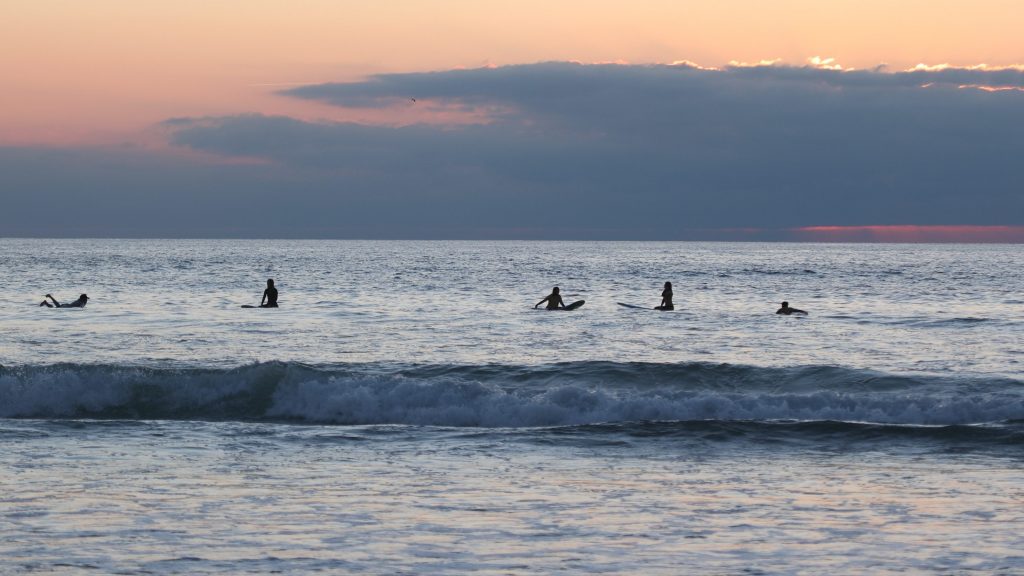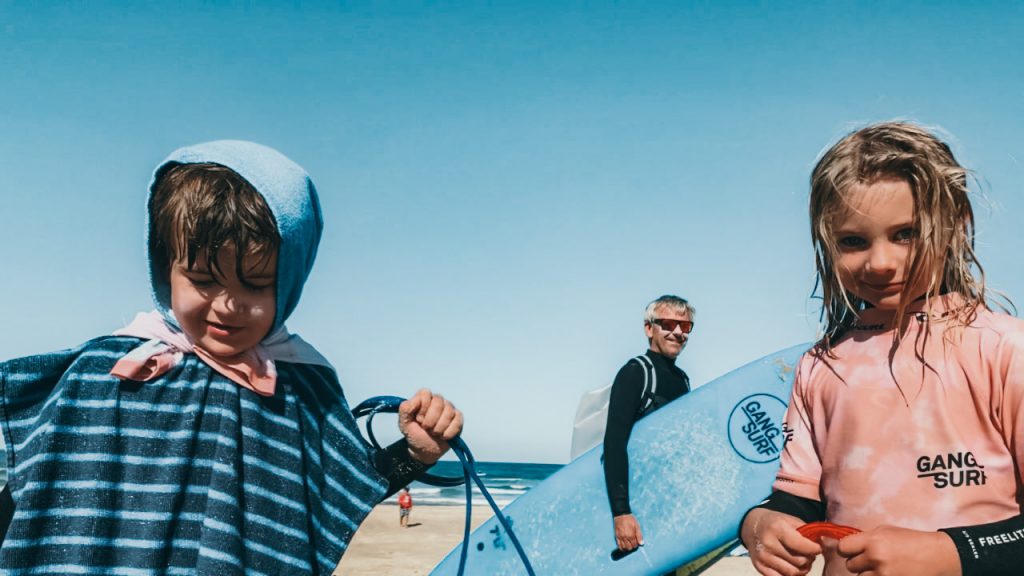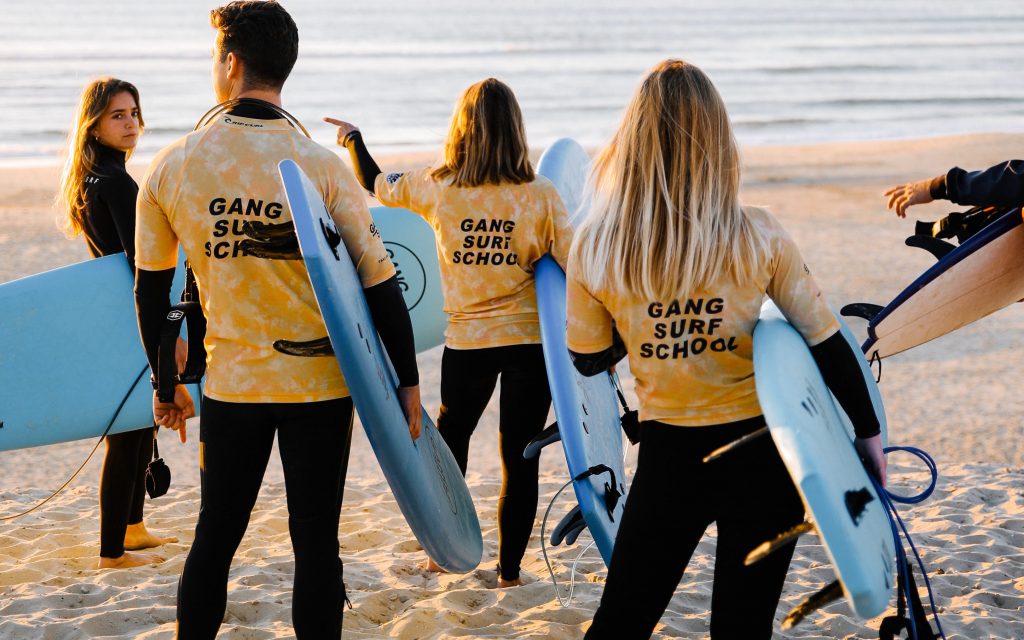
We've prepared 9 essential tips to help you start surfing with confidence. Everything you need to know before hitting the waves and enjoying the surf in Biscarrosse or elsewhere!
1: Warm up
Before you start, a warm-up and active stretching session is recommended. Prepare your body for the physical exertion ahead! Surfing engages muscles such as those in the back, shoulders, and abdominal area.
So don't forget this little bit of preparation if you want to avoid having your session marred by an injury.
2: Use equipment appropriate to your skill level
Don't forget that the width and thickness of a surfboard should be suited to your skill level. Even if you dream of slicing through waves with a shortboard, you'll initially need to choose a wider and thicker board, which will help you find your balance, improve your stance, and your righting technique.
3: Move forward step by step
For progress to be effective, it is essential to be realistic about one's starting level.
Even if you've always dreamed of ever deeper tubes or ever higher waves, the ideal is to start at the beginning: stand up!
Starting in the whitewater will help you develop and improve your recovery, and remember to always look around before committing to a wave because it's rare to be alone in the water!
4: Listen to your body
Your lifestyle will influence the quality of your sessions. We're not asking you to become a monk, but we do advise you to eat well, sleep well, stay hydrated, and above all, let your body rest when needed. Respecting this will have a positive impact on your future sessions in the water.
5: Analyze your environment
The beaches of Biscarrosse don't have the same configuration as the beaches of Brittany or even Réunion Island. Learning to surf goes hand in hand with a more comprehensive understanding of the marine environment: wind direction, seabed analysis, currents, swell—all these details will help make this experience even more incredible.
6: Engage in additional physical activity
We recommend incorporating a complementary activity such as skateboarding, cycling, running, swimming, or even boxing… These sports are excellent for improving your breathing and coordination, which is very useful for surfing. The Landes region offers a wide range of indoor and outdoor activities to complement board sports, so don't hesitate to ask around!
7: Patience and humility
Perfect conditions are rare, and sessions like these are even rarer! You'll need to learn patience and how to manage the frustration caused by the lack of waves or a less than convincing session.
It also requires humility to realize that learning to surf is a slow process and can feel like starting from scratch with each session. But don't worry, if your goal is to progress for the sheer joy of it, your efforts will be rewarded.
8: Respecting the rules in the water
To drive a car you need to know the highway code in order to understand the signs, pictograms or behavior of other road users.
The rules in the water work similarly. There are priority rules that are important to respect if you don't want to incur the wrath of the local surfers.
When you're on Vivier or North beach, greet the locals, observe, and be discreet, and your sessions will be all the more enjoyable! You can also benefit from the advice of local surfers, just like in Biscarrosse, which is full of excellent wave riders!
9: Take surfing lessons!
What better way to improve than with a professional?! With teams like Gang Surf in Biscarrosse, you'll be guided to adopt the right techniques and reflexes right from the start. They are true accelerators of progress, and in the next article, we'll see what a surf lesson at Gang Surf is like!